In esports, the outcome of a best-of-1 match can depend heavily on a single moment, one error of judgment, or a tiny delay in reaction times. A best-of-5 match gives both teams more leeway to adapt to their opponent’s playstyle and make sure they are playing at their best. That difference is the hidden engine behind most esports markets: format.
Still, in the world of esports, and especially in terms of gambling on esports, the language can seem arcane and unfamiliar to anyone just getting started. To help with that, this article translates two of the most important labels you will see constantly on esports match pages, moneyline and map handicap, into language you already use.
See The Terms On A Real Sportsbook Page
Before we cover the definitions, it helps to see these terms as they are used on a live sportsbook page. This will help you to read labels the way they are actually presented once you know their definitions. On Lucky Rebel Casino, the sportsbook section groups common bet types in one place and uses the same core words you will run into around esports, including “moneyline” and other terms like “futures.”
Reading through the site gives you a neutral reference point for how books separate a straight match-winner label from longer-horizon outcomes, and it also shows the spread mechanic that map handicaps are built from. Whether the listing is football, a shooter, or a MOBA, the logic stays the same: pick the winner, or grade the result after an adjustment. On many esports pages, map handicaps are simply labeled handicap or spread.
If you find other terms you are unfamiliar with, Lucky Rebel Casino also links to a help portal for sportsbook basics, which is useful when you just want a definition without extra filler.
Moneyline Is the Match Winner Label
Moneyline is one of the simplest betting options because it cares only about the winner. In esports terms, moneyline means “who wins the match.” If the match consists of a best-of-1 game, then it will be whoever wins that round. In best-of-3, it only cares who is the first to two wins. In best-of-5, it’s the first team to win three games.
The common misread is assuming that moneyline always means the team that is strongest. In a best-of-3, a team can lose the first game by a wide margin, but then pick up and scrape a narrow victory in the next two games. Overall, it may seem like they played worse, but they still won the match. Moneyline does not grade on style points or care how close the outcome was. Only the final result matters.
A small habit keeps you grounded: mentally replace moneyline with match winner every time you see it. If the label is asking for a winner, do not let highlights, momentum talk, or “they almost had it” storytelling change the question.
Map Handicap Is Map Math
A map handicap is a spread, but the unit is maps, rather than points. The book adds or subtracts a set number of maps from a team’s final map count, and then evaluates the adjusted result. This is why you will often see 0.5 or 1.5, because halves prevent a tie.
In a best-of-3, a favorite at -1.5 maps must win by 2 maps, which means a 2-0. An underdog at +1.5 maps can lose 2-1 and still satisfy the handicap, because adding 1.5 to its 1 map win puts them ahead in the adjusted comparison.
In a best-of-5, the same -1.5 usually implies “win by 2 maps,” which allows 3-1 or 3-0. On the other side, +1.5 generally means the underdog can take 2 maps and still come out ahead after the adjustment. The label did not change. The series length changed which scorelines can satisfy it.
Decimal Odds Without the Noise
You may also see that the chances of any particular outcome being displayed in decimal odds, which can be confusing to those coming from outside the gambling field, who may be more familiar with probabilities being expressed as percentages. Fortunately, decimal odds can be converted to implied probability using a simple formula: Implied probability = 1 ÷ decimal odds.
Using this, we see that a value of 2.00 converts to 50%. Likewise, 1.50 comes out at about 67%. Once you get used to these, they start to make more sense.
Futures and Why Best-of Still Matters
Futures is another term you might see here. Put simply, futures are markets that settle at a later time, usually around an event outcome, rather than a single match. In esports, that might mean tournament winner, team to reach the final, or group winner. Futures can seem harder to understand because they bundle many opponents and many formats into a single label.
The right way to read a futures line is to ask what a team must do repeatedly, not just once. A run can include best-of-1 groups and best-of-3 playoffs, and sometimes a best-of-5 final. Teams built for adaptation can look stronger as a series gets longer, while teams built around a sharp opener can pop early.
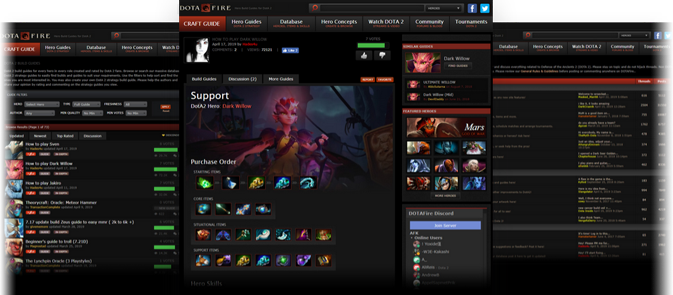
If you want more competitive context for how roles, drafts, and win conditions shift across matchups, browsing a few Dota 2 build guides can help you connect these labels back to what happens on the map.
Keep the layers straight, and the jargon becomes readable. Moneyline refers to the match winner. Map handicap changes how many maps a team needs to win by for the bet to count. Futures are bets on a longer scale. Understanding these different elements will make it easier to enjoy esports, especially if you want to have a flutter!